Reflections on Connections
We in Parks and Recreation inevitably come around to examining where our role begins and ends. We are a diverse lot; our roles are as infinitely variable as the number of communities in which we serve. So to some extent we are a self defining group – defined in large part by our education, redefined by our interests and talents, and yet again by the input from our workplace, and broadly by our communities.
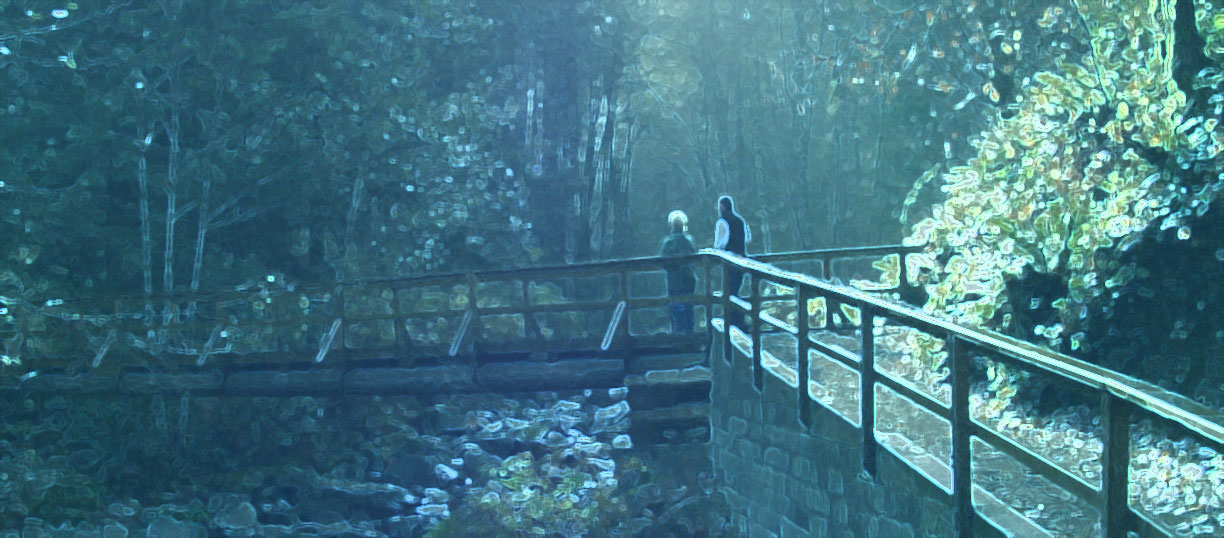 One clear direction shared by many communities of late is building linear parkways, trails and links. The aging boomer generation is now paying heed to all those ‘Participaction’ ads of yesteryear. They are turning their attention to walking in the great outdoors. This activity combines fresh air, exercise and staying close to nature. The creation of trails systems attends to our desire to get outside while often preserving areas within residential zones in a natural state.
The ‘trails facility’ should be right outside the residential front door. People are now clamoring for access to an informal fitness opportunity, and a sense of the open road – on foot.
Consider the creation of the Trans Canada Trail. It would not be possible without the age and demographic of our population. Just twenty years ago talk about a ‘Cross Canada Trail’ would have been seen in the context of Champlain and the voyageurs and a wide pioneering adventure. Nowadays anyone who can walk a few miles can undertake a small piece of the adventure – knowing that not only has someone gone before but that they have built bridges, graveled trailbeds, washrooms, and B&B’s en route. Clearly walking has arrived. Did it get here on foot?
And the connection? After Canada had been formulated from Upper and Lower Canada, It was some time before the rail link all the way across the continent was proposed. The Canadian politicians of the time took a huge, expensive gamble to build a railway stretching from sea to sea in an attempt to create a new larger nation. It was a political gamble – but made great political hay when Canada shipped out the RCMP in a record breaking seven days to quell the so-called Riel rebellion. The rail link helped bring B.C. into confederation and the iron horse was one of the leading technologies of the day. In the time before automobiles, rail freight and passenger transportation was the most desired connection.
Today, at the start of the twenty-first century we have a different slant on that connection – in the age of space travel and Mars landings, we are finding joy and satisfaction in creating a footpath from sea to sea. Low and slow. What can it mean? As a culture, we have the ability to explore space and yet we are motivated to personalize this exploration, to bring it into our own lives, to retain nature around us, to take a bit of fresh air – and go for a walk.
Several months ago I decided to do personal research on walking for this article. Let me share the results with you now. First, I have discovered that it takes hours to walk anywhere and quite often, in fact usually, I wind up back where I started! So progress, in this milieu, must be measured in some other element that mere distance covered.
With our increasingly technological society, bombarded as we are by media and stimulation, rushing forward becomes a way of life. While we rush through, we do not often savor the experience because we don’t have time before our next appointment. What sustains us in the mean time, it seems, is an intellectual agreement with ourselves that by following this course (meeting, class, job) we will either: a) get ahead, or b) we will enjoy ourselves later. Both theories work for some time. Some people make them work for a lifetime. We put off savoring the moment because it ‘makes sense’ and we tell ourselves later will do.
What I observe on the faces of walkers everywhere is a ‘letting go’ for a while, a time to forget, or begin to forget, all the hustle and bustle. To just walk for a while; to experience the randomness of nature, the beauty of the clouds, the rustle of the leaves. These sensory experiences trigger ancient responses. Combine the sights and sounds with the accelerated metabolics of a tad of exercise and you have an integrating experience, one that reverses the feeling of being just a tiny cog in civilization’s great wheel.
Walking connects us with others. Walking around the neighbourhood is a great way to become part of your surroundings, to develop a sense of belonging. Once again we learn how to savor. In communities across Canada people are reacting to the need to establish and protect their environments, and to experience them first hand, with linear pathways and green spaces.
 Playground Info